
Daylight Saving Time Is Ending: How to Adjust Your Window Shades for Shorter Days
Every fall, most areas of the United States transition out of Daylight Saving Time (DST). In 2026, Daylight Saving Time ends on November 1, when clocks in most of the U.S. are turned back one hour and standard time begins. Hawaii, most of Arizona, and some U.S. territories do not observe Daylight Saving Time.
While “falling back” means gaining an extra hour of sleep, it also means that sunset arrives earlier. This seasonal change can affect how much natural light enters your home, when you need artificial lighting, and how you use your window treatments throughout the day.
The good news? The right window shades for shorter days can help you make better use of available daylight while maintaining privacy, comfort, and a cozy atmosphere throughout fall and winter.
1. How Does the End of Daylight Saving Time Affect Your Home?
When Daylight Saving Time ends, one hour of daylight shifts from the evening to the morning.
That means you may notice:
More natural light earlier in the morning
Earlier sunsets in the afternoon and evening
A greater need for indoor lighting later in the day
Increased privacy needs after sunset
According to the National Institute of Standards and Technology (NIST), when Daylight Saving Time ends, clocks are moved back one hour, shifting an hour of daylight from the evening to the morning.

2. Adjust Your Window Shades Throughout the Day
After Daylight Saving Time ends, your home's natural light pattern changes. Instead of keeping your shades in the same position all day, consider adjusting them according to the time of day.
Morning: Make the Most of Natural Light
Because daylight arrives earlier under standard time, you may be able to open your window shades earlier in the morning.
Allowing natural light into your home can make rooms feel brighter and more inviting while reducing the need for artificial lighting during daylight hours. The U.S. Department of Energy provides guidance on using daylight effectively in residential spaces.
https://bsesc.energy.gov/energy-basics/natural-light-and-daylighting?utm_source=chatgpt.com
Afternoon: Manage Glare and Brightness
If your windows face west, afternoon sunlight can still create glare, even as the days become shorter.
Zebra Shades, Roller Shades, and Light-Filtering Cellular Shades can help you adjust the amount of light entering your home while maintaining a comfortable interior environment.
Evening: Close Shades Earlier
As sunset arrives earlier, you may want to close your window shades earlier in the evening.
This can help improve privacy and create a warmer, more comfortable atmosphere as outdoor light fades.

3. Which Window Shades Are Best for Fall and Winter?
Different rooms have different lighting, privacy, and comfort needs. Choosing the right window treatments for fall and winter can make your home feel more comfortable as daylight hours become shorter.
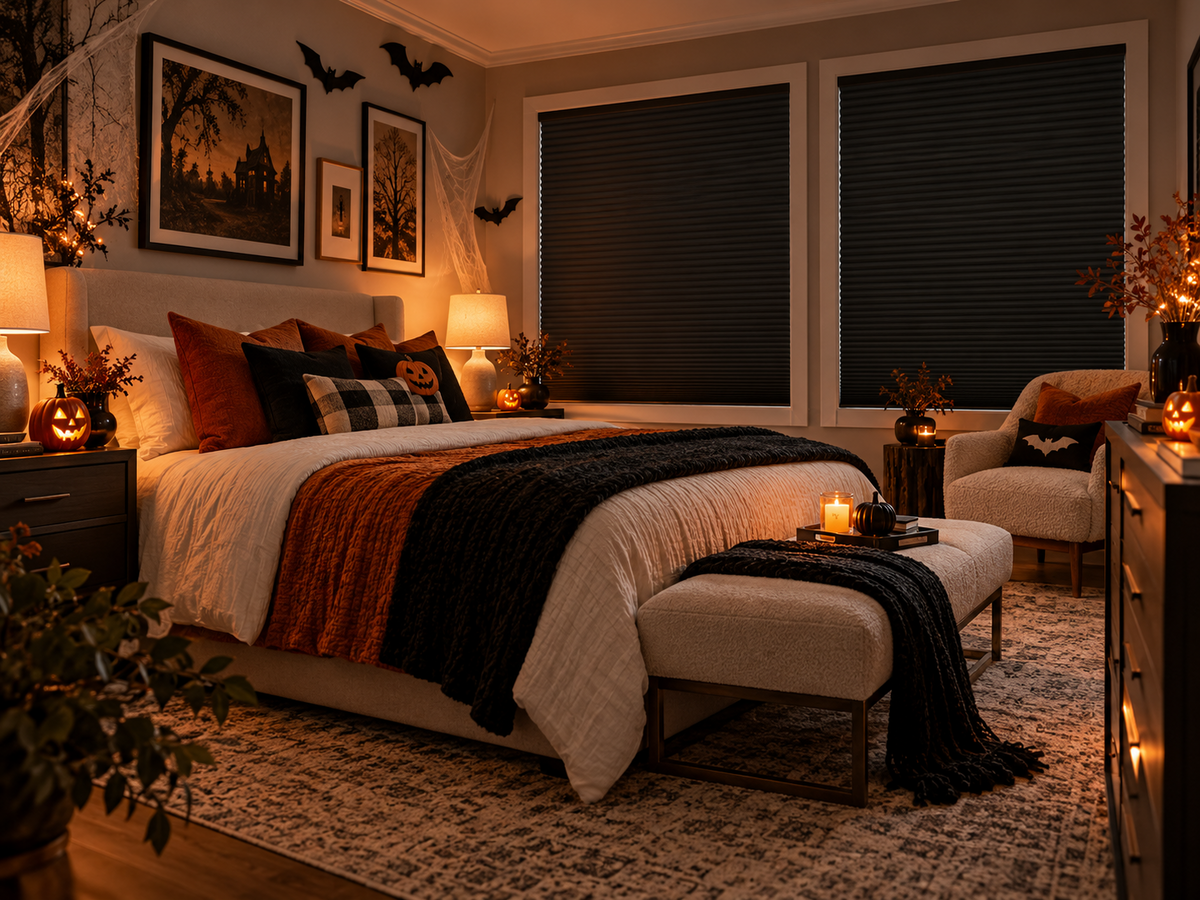
Bedroom: Blackout Cellular Shades
Bedrooms typically benefit from excellent light control and privacy.
Blackout Cellular Shades can help create a darker, more private sleeping environment. Their cellular construction also provides an insulating layer that can help reduce heat transfer through the window.
The U.S. Department of Energy notes that properly designed cellular shades can help reduce heat loss through windows and improve overall energy performance.
https://www.energy.gov/documents/bto-cellular-shades-factsheet-112221pdf?utm_source=chatgpt.com
Living Room: Zebra Shades
Living rooms often need a balance between natural light, privacy, and flexible light control.
Zebra Shades are a versatile option because their alternating sheer and solid fabric sections allow you to adjust light and privacy throughout the day.
They work particularly well in living rooms and dining areas where you want to enjoy natural light without completely exposing the interior.
Kitchen and Home Office: Roller Shades
If you prefer a clean, modern appearance, Roller Shades are a practical option for kitchens, home offices, and multipurpose rooms.
Their simple design provides straightforward light control while keeping the window area visually clean.
Large or Hard-to-Reach Windows: Motorized Shades
For large, tall, or difficult-to-reach windows, Motorized Shades can make everyday adjustments much more convenient.
With motorized control, you can adjust your shades without manually reaching for each window.

4. Why Are Cellular Shades a Good Choice for Fall and Winter?
As temperatures become cooler, windows can become an important part of a home's overall thermal performance.
The U.S. Department of Energy explains that windows can be a significant source of heat transfer in homes and that window attachments such as cellular shades can help reduce heat loss.
https://www.energy.gov/documents/bto-cellular-shades-factsheet-112221pdf?utm_source=chatgpt.com
Cellular shades feature a honeycomb structure that creates air pockets within the shade. These air pockets can provide an additional insulating layer between the room and the window.
This makes Cellular Shades worth considering if you want both light control and improved comfort during the colder months.
However, actual performance can vary depending on the window type, shade fabric, installation method, and how the shades are used. No single window treatment is ideal for every home.

5. Create a Warmer and Cozier Home for Fall
Adjusting your window shades is only one way to make your home more comfortable as the days get shorter.
You can also make a few simple seasonal changes:
Use warm-toned lighting to balance earlier sunsets.
Introduce neutral fall colors such as beige, cream, brown, and warm gray.
Add natural textures such as wood, linen, and woven materials.
Keep windows clean to maximize available natural light.
Choose light-filtering, blackout, or adjustable shades based on each room's needs.
The U.S. Department of Energy also recommends using window treatments appropriately to manage unwanted solar heat while making effective use of natural daylight.
https://bsesc.energy.gov/energy-basics/natural-light-and-daylighting?utm_source=chatgpt.com

6. The End of Daylight Saving Time Is a Good Time to Reassess Your Window Shades
The end of Daylight Saving Time is more than a reminder to change your clocks. It can also be a useful reminder to take a fresh look at your home's window treatments.
Pay attention to which rooms become too dark in the late afternoon, which windows need more privacy after sunset, and which bedrooms could benefit from better light control.
Then choose window shades based on the needs of each space.
Blackout Cellular Shades are ideal for bedrooms where darkness and privacy are priorities.
Zebra Shades are a great choice for living rooms where you want flexible control over natural light and privacy.
Roller Shades work well in spaces where you prefer a clean, minimalist look.
Motorized Shades can be especially convenient for large, tall, or hard-to-reach windows.
Make the Most of Shorter Days
The end of Daylight Saving Time changes more than the clocks. It changes the rhythm of natural light inside your home.
Instead of viewing earlier sunsets as an inconvenience, use the seasonal transition as an opportunity to rethink your window treatments, lighting, and home environment.
From opening your shades in the morning to welcome natural light, adjusting them during the afternoon to manage glare, and closing them earlier in the evening for privacy, the right window shades can help your home adapt to the changing seasons.
Whether you choose Cellular Shades, Blackout Shades, Zebra Shades, Roller Shades, or Motorized Shades, the most important thing is finding a solution that fits your room, natural lighting conditions, and lifestyle.
Make the most of every hour of daylight and create a more comfortable home throughout fall and winter.