
Blackout vs. Light Filtering Shades: Which One Is Right for Your Room?
Choosing between blackout shades and light filtering shades may seem simple: one makes a room darker, while the other lets in more light.
But the right choice depends on more than brightness.
Do you want a darker bedroom for sleep? A bright living room without harsh glare? More privacy at night? Better insulation around a sunny window?
Different rooms have different needs, and choosing the wrong opacity can make a room feel either too dark or too exposed.
This guide explains the difference between blackout and light filtering shades, where each works best, and what to know before you order.
Blackout vs. Light Filtering Shades: Quick Comparison
| Feature | Blackout Shades | Light Filtering Shades |
|---|---|---|
| Natural light | Blocks most or essentially all light through the fabric | Softens and diffuses daylight |
| Room brightness | Darker | Brighter |
| Daytime privacy | Excellent | Usually very good |
| Nighttime privacy | Excellent | Depends on fabric |
| Bedroom | Excellent | Better for people who prefer daylight |
| Living room | Good for strong sun | Excellent |
| Home office | Good for severe glare | Usually better |
| Media room | Excellent | Usually not ideal |
| Best for | Darkness, privacy, sleep | Daylight, comfort, glare control |
The easiest way to think about the difference is:
Blackout shades are designed to block light. Light filtering shades are designed to manage light.
What Are Blackout Shades?
Blackout shades use opaque fabrics or additional layers designed to prevent visible light from passing directly through the material.
They are especially useful in bedrooms, nurseries, media rooms, guest rooms, and spaces affected by strong sunlight or exterior lighting.
Changshade offers blackout options across cellular and other window-shade styles. You can explore the Changshade Cellular Shades collection for current blackout and light-filtering options.
One Important Point: Blackout Does Not Always Mean a Completely Dark Room
A shade may use 100% blackout fabric, but that does not automatically mean the entire room will have zero visible light.
Why?
With an inside mount, small clearances are usually needed along the sides so the shade can move smoothly. Light can still enter through these gaps or around the top and bottom.
So:
Blackout fabric ≠ completely light-proof installation.
If maximum darkness is important, especially in a bedroom, the mounting method also matters. An outside-mounted shade with enough overlap can often reduce edge light better than an inside mount.
Before ordering, review the Changshade Measurement and Installation Guide.
What Are Light Filtering Shades?
Light filtering shades allow natural daylight to pass through the fabric while reducing its intensity.
Instead of making a room dark, they soften strong sunlight and create a more comfortable, evenly lit space.
They are particularly useful in:
- Living rooms
- Dining rooms
- Kitchens
- Home offices
- Family rooms
- Reading areas
Changshade currently offers several light-filtering configurations. Browse the Changshade Light Filtering collection.
Light filtering shades are ideal when you want daylight without the harshness of direct sun.
Do Light Filtering Shades Provide Privacy?
Yes, but privacy can change depending on the time of day.
Many light filtering fabrics provide good daytime privacy because they diffuse the view through the window.
At night, the situation is different.
When your indoor lights are on and it is dark outside, some lighter fabrics may reveal shadows or silhouettes.
Privacy depends on fabric density, color, construction, and the lighting inside and outside the room.
If nighttime privacy is very important—for example in a bedroom or street-facing bathroom—blackout or a more opaque fabric is usually the safer choice.
Which Is Better for Bedrooms?
For most bedrooms, blackout shades are the better option.
They help reduce early morning sunlight, streetlights, headlights, and other exterior light sources.
Research has also found an association between higher exposure to light at night and sleep problems. A systematic review involving more than 577,000 participants concluded that maintaining a darker bedroom at night may help reduce nighttime light exposure.
You can read the PubMed study on nighttime light exposure and sleep.
Best choice for bedrooms: Blackout

Choose light filtering only if you prefer waking naturally with daylight or plan to pair the shade with blackout curtains.
Which Is Better for Living Rooms?
For most living rooms, light filtering shades are more versatile.
They soften harsh sunlight while keeping the room bright and comfortable.
This makes them especially useful for reading, relaxing, entertaining, and watching television during the day.
A blackout shade can still make sense if the room receives intense afternoon sun or doubles as a media room.
Best choice for living rooms: Light Filtering

The goal is usually not to eliminate sunlight but to make it more comfortable.
Which Is Better for a Home Office?
Home offices need a balance between natural light and glare control.
A blackout shade can remove glare completely, but it may also make the office too dark during the day.
Light filtering shades soften direct sunlight while maintaining a bright workspace.
Best choice for most home offices: Light Filtering

Choose blackout if you work with photography, video editing, projection, or have unusually strong direct sunlight.
What About Nurseries?
Nurseries often need both daylight and darkness.
During playtime, you may want natural light.
During naps, stronger light control can be useful.
For this reason, blackout shades are a practical choice, but a Day & Night shade offers even more flexibility.
Changshade's Day & Night cellular shade combines a light filtering section and a blackout section in one window treatment.
Explore Changshade Day & Night Cellular Shades

Blackout vs. Light Filtering by Room
| Room | Recommended Choice | Main Reason |
|---|---|---|
| Bedroom | Blackout | Darkness and privacy |
| Nursery | Blackout / Day & Night | Better nap-time control |
| Living room | Light Filtering | Natural daylight |
| Home office | Light Filtering | Reduced glare |
| Media room | Blackout | Better screen viewing |
| Kitchen | Light Filtering | Keeps the room bright |
| Bathroom | Blackout or opaque Light Filtering | Privacy |
| Guest room | Blackout | Works for more sleep preferences |
In many homes, the best solution is simple:
Blackout in bedrooms and light filtering in daytime living spaces.
Cellular or Roller: Does the Shade Type Matter?
Yes.
“Blackout” and “light filtering” describe how much light the fabric allows through.
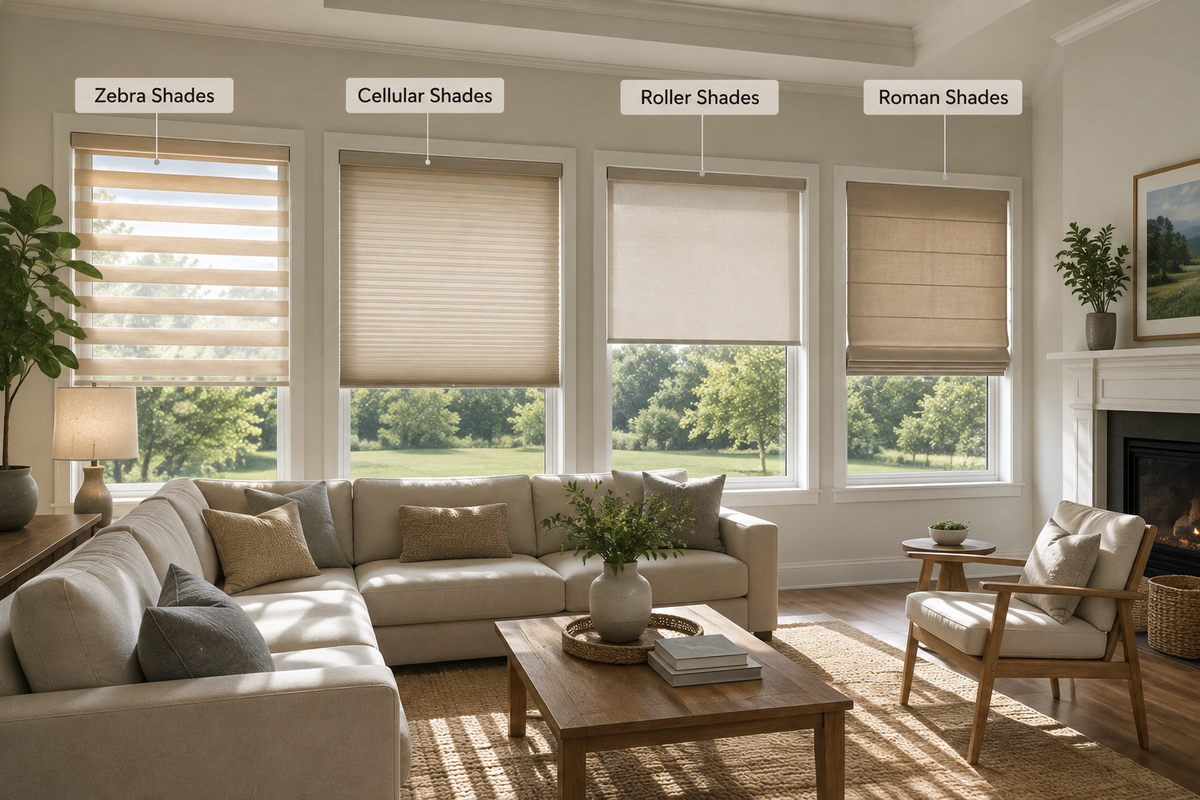
“Cellular,” “roller,” and “zebra” describe how the shade is constructed.
So you can have:
- Blackout cellular shades
- Light filtering cellular shades
- Blackout roller shades
- Light filtering roller shades
Cellular Shades
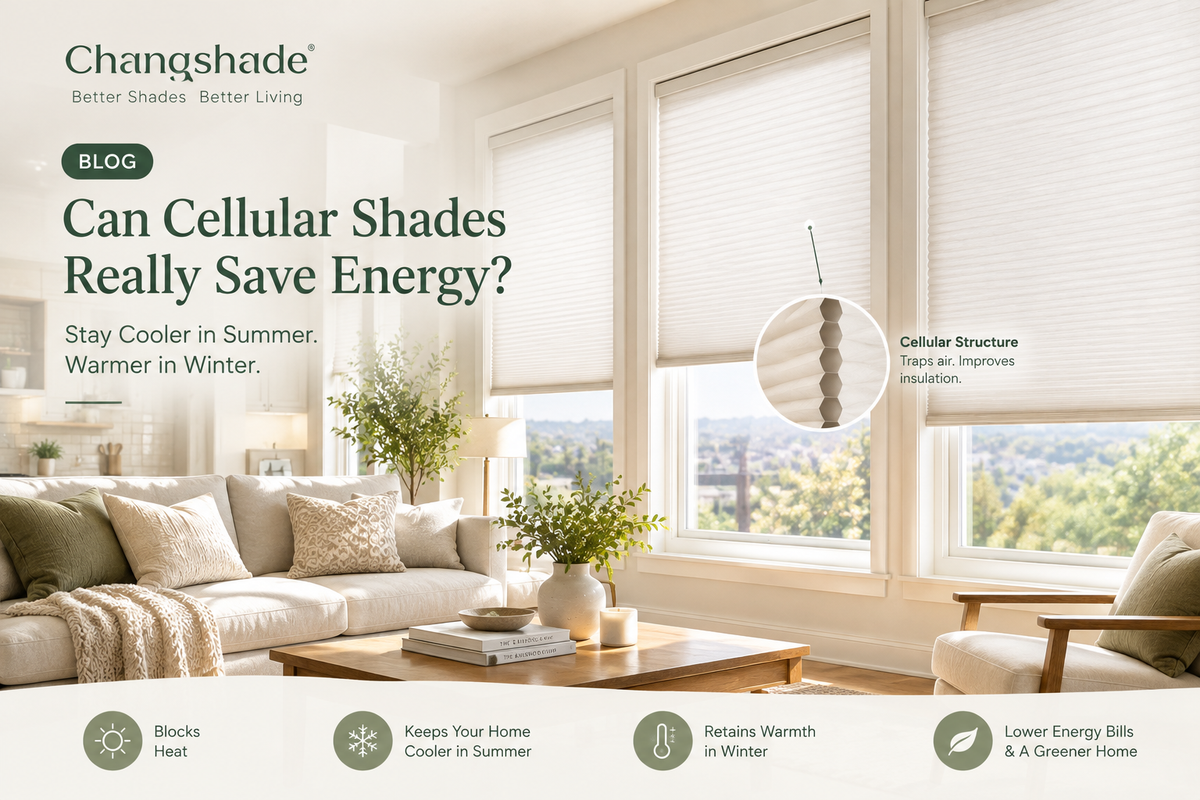
Cellular shades use a honeycomb structure that creates air pockets inside the shade.
The U.S. Department of Energy notes that well-fitted cellular shades can trap air within their cells and between the shade and window, helping reduce heat transfer.
Read more from the U.S. Department of Energy on cellular shade energy performance.
This means cellular shades can be a good option if you care about both light control and insulation.
Roller Shades
Roller shades use a clean, flat panel of fabric and create a more minimalist appearance.
Blackout roller shades work well in bedrooms and media rooms, while light filtering roller shades are often a strong choice for living rooms, kitchens, and offices.
You can browse the Changshade Roller Shades collection.
Inside Mount vs. Outside Mount for Blackout Shades
Mounting style can significantly affect how dark a room feels.
Inside Mount
The shade sits inside the window frame.
It creates a clean, built-in appearance, but small side gaps may remain.
Outside Mount
The shade covers the window opening and extends onto the surrounding trim or wall.
This can provide greater coverage and reduce visible side light.
If maximum darkness is your priority, an outside mount with enough overlap may perform better.
If appearance and a clean recessed look matter more, an inside mount may be preferable.
Neither is automatically better—the right option depends on your window and your goal.
Do Blackout Shades Help With Heat?
They can help reduce strong solar gain, but blackout and insulation are not the same thing.
Thermal performance also depends on the construction of the shade, its fit, and the space between the shade and the window.
This is where cellular shades have an advantage.
If you want both darkness and insulation, blackout cellular shades are worth considering.
If you want daylight and insulation, light filtering cellular shades may be a better match.
What If You Want Both?
You do not always have to choose only one.
You can pair light filtering shades with blackout curtains, use different opacity levels in different rooms, or choose a Day & Night shade.
For example:
Bedroom: Blackout
Living room: Light Filtering
Office: Light Filtering
Media room: Blackout
Trying to use the same opacity throughout the entire house is often unnecessary.
Different rooms should solve different problems.
Common Mistakes to Avoid
One of the most common mistakes is assuming dark fabric automatically means blackout. Fabric construction—not just color—determines opacity.
Another is expecting a blackout inside-mounted shade to create absolutely zero light. Edge gaps may still be visible.
It is also important not to assume that every light filtering fabric provides complete nighttime privacy.
Finally, don't choose fabric before thinking about measurements and mounting style.
For more buying advice, read Changshade's 5 Common Mistakes When Buying Blinds.
Frequently Asked Questions
Are blackout shades really 100% blackout?
The fabric may block essentially all light passing through it, but light can still enter around the edges of the installed shade.
Are light filtering shades good for privacy?
Usually, especially during the day. At night, privacy varies depending on fabric and indoor lighting.
Which is better for bedrooms?
For most bedrooms, blackout shades provide better light control and privacy.
Which is better for living rooms?
Light filtering shades are usually better because they soften sunlight without making the room unnecessarily dark.
Can cellular shades help with insulation?
Yes. Their honeycomb structure traps air and can help reduce heat transfer around the window.
Final Thoughts
The best choice between blackout and light filtering shades depends on what you want the room to do.
Choose blackout shades when darkness, sleep, privacy, or strong light control matters most.
Choose light filtering shades when you want natural daylight, softer brightness, and reduced glare.
And remember: the same shade does not need to work everywhere in your home.
A bedroom may need blackout.
A living room may need light filtering.
A nursery may benefit from both.
Once you know how much light you want, choosing the right fabric, shade style, and mounting method becomes much easier.
Explore Changshade Cellular Shades or Changshade Light Filtering Shades to compare options for your home.
The goal isn't simply to block light—it's to create the right balance of light, privacy, and comfort for each room.