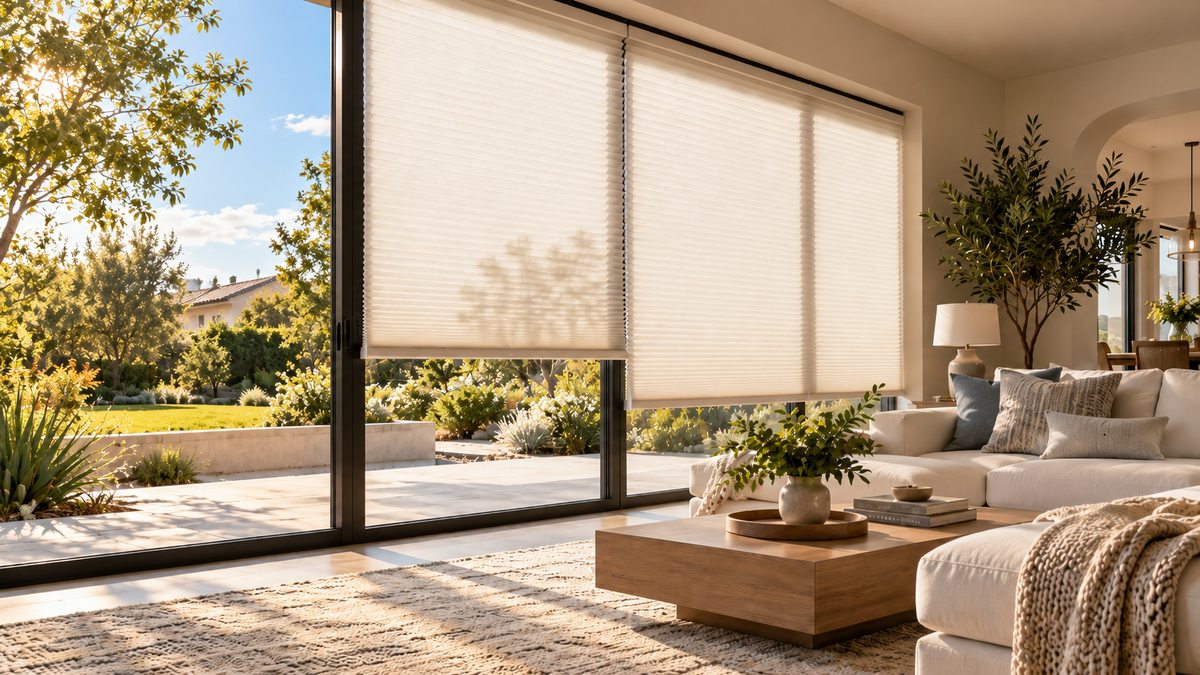

El Niño and Your Home: How Window Shades Can Support Comfort and Sustainability
El Niño can affect weather patterns thousands of miles from the tropical Pacific.
It does not simply mean “hotter weather everywhere.” Instead, El Niño changes ocean and atmospheric circulation, which can influence temperature, rainfall, storm tracks, and seasonal weather patterns in different regions.
For homeowners, changing weather patterns are a reminder that indoor comfort depends not only on heating and air conditioning, but also on how the home manages sunlight and heat around its windows.

What Is El Niño?
El Niño is the warm phase of the El Niño–Southern Oscillation, or ENSO.
It develops when surface waters in the central and eastern equatorial Pacific become warmer than normal and the atmosphere responds to those warmer ocean temperatures.
These changes can influence the position of the Pacific jet stream and alter weather patterns across the globe.

What Does This Mean for the Home?
El Niño itself does not directly determine the temperature inside your living room.
But unusual periods of heat, cold, rain, or changing seasonal conditions can increase the work required to keep a home comfortable.
Windows are an important part of that equation.
During warm and sunny periods, solar radiation entering through glass can add heat to a room. During cooler periods, windows can also become an area where indoor heat escapes more easily.
That is why window coverings can be more than decorative.
Used correctly, they can help manage the amount of sunlight and heat moving through the window area.

How Cellular Shades Can Help
One of the most useful window treatments for thermal comfort is the cellular shade.
Unlike a flat piece of fabric, cellular shades use a honeycomb structure containing air pockets.
U.S. Department of Energy: Interior Cellular Shades and Home Energy Performance
For a sunny room, closing cellular or blackout shades during periods of strong direct sunlight can help reduce some solar heat entering the interior.
During colder weather, keeping a well-fitted cellular shade closed can also help reduce heat transfer near the glass.

Changshade currently offers blackout, light-filtering, top-down bottom-up, and no-drill cellular options.
Explore Changshade Cellular Shades
This does not mean a window shade can replace proper insulation, efficient windows, or an HVAC system.
The more accurate way to think about it is:
A well-chosen shade can help reduce part of the unwanted heat gain or heat loss occurring around the window.
Blackout or Light Filtering?
Different rooms may need different strategies.
A blackout shade can make sense for a bedroom or a west-facing room that receives intense afternoon sun. Blocking direct sunlight through the fabric can help make the space darker and reduce solar exposure.
A light-filtering shade may be more appropriate for a living room or home office where you still want natural daylight but would like to reduce harsh sunlight and glare.
If you're unsure which type is right for a particular room, Changshade's Blackout vs. Light Filtering Shades guide can help you compare the two based on privacy, daylight, and room use.
You can also start with Changshade Shades above and choose the opacity according to your room.
Sustainability Is About More Than Energy Savings
Energy performance is only one part of environmental responsibility.
The materials used to make household products also matter.
The U.S. Environmental Protection Agency recommends looking at materials from a life-cycle perspective—from raw material extraction and manufacturing through use, maintenance, reuse, and eventual disposal. EPA notes that using fewer materials, choosing more durable materials, reducing harmful substances, and extending product life can all help reduce environmental impact.
This is also a useful way to think about window coverings.
An environmentally conscious shade is not simply one with a green label.
It may involve a combination of durable construction, renewable materials, recycled content, recyclable components, lower-impact manufacturing, or materials that can biodegrade under appropriate conditions.
What About Biodegradable Materials?
Biodegradable and renewable materials can help reduce reliance on persistent synthetic materials, but the claim needs to be used carefully.
A complete window shade may contain fabric, bamboo, metal, plastic, coatings, brackets, and operating mechanisms.
So even if one part of the shade is biodegradable, that does not automatically mean the entire product is.
A better approach is to clearly identify the materials that are actually used.
For example, Changshade's bamboo Roman shades use natural bamboo rods and slats, giving homeowners an option that brings a renewable natural material into the window treatment.

Explore Changshade Bamboo Roman Shades
Natural materials alone do not make a product completely sustainable, but they can be one part of a broader approach that considers material sourcing, durability, product lifespan, and end-of-life treatment.
Small Choices Can Make a Difference
We cannot control El Niño from inside our homes.
But changing weather patterns can remind us to think more carefully about how our homes respond to sunlight, heat, cold, and resource use.
A few practical choices can help: use shades strategically during periods of strong sun, consider cellular construction when insulation matters, choose durable products that do not need frequent replacement, and look for renewable, recycled, recyclable, or biodegradable materials where they make sense.
Window shades will not stop climate change or eliminate the effects of extreme weather.
But they can play a small, practical role in creating a home that responds more efficiently to the environment outside.
For Changshade, that means thinking beyond appearance alone.
Better window treatments should help create spaces that are comfortable to live in today while encouraging more thoughtful use of energy and materials for the future.