
What Are Top Down Bottom Up Shades?
Traditional shades usually move in one direction—from the bottom up.
That works well for basic light control, but it can create a problem: when you want privacy, you often have to cover most of the window and lose natural light at the same time.
Top down bottom up shades, often called TDBU shades, solve this by giving you more flexibility.
You can lower the shade from the top, raise it from the bottom, or position it somewhere in between.
This allows you to cover the part of the window where you need privacy while keeping another section open for daylight.
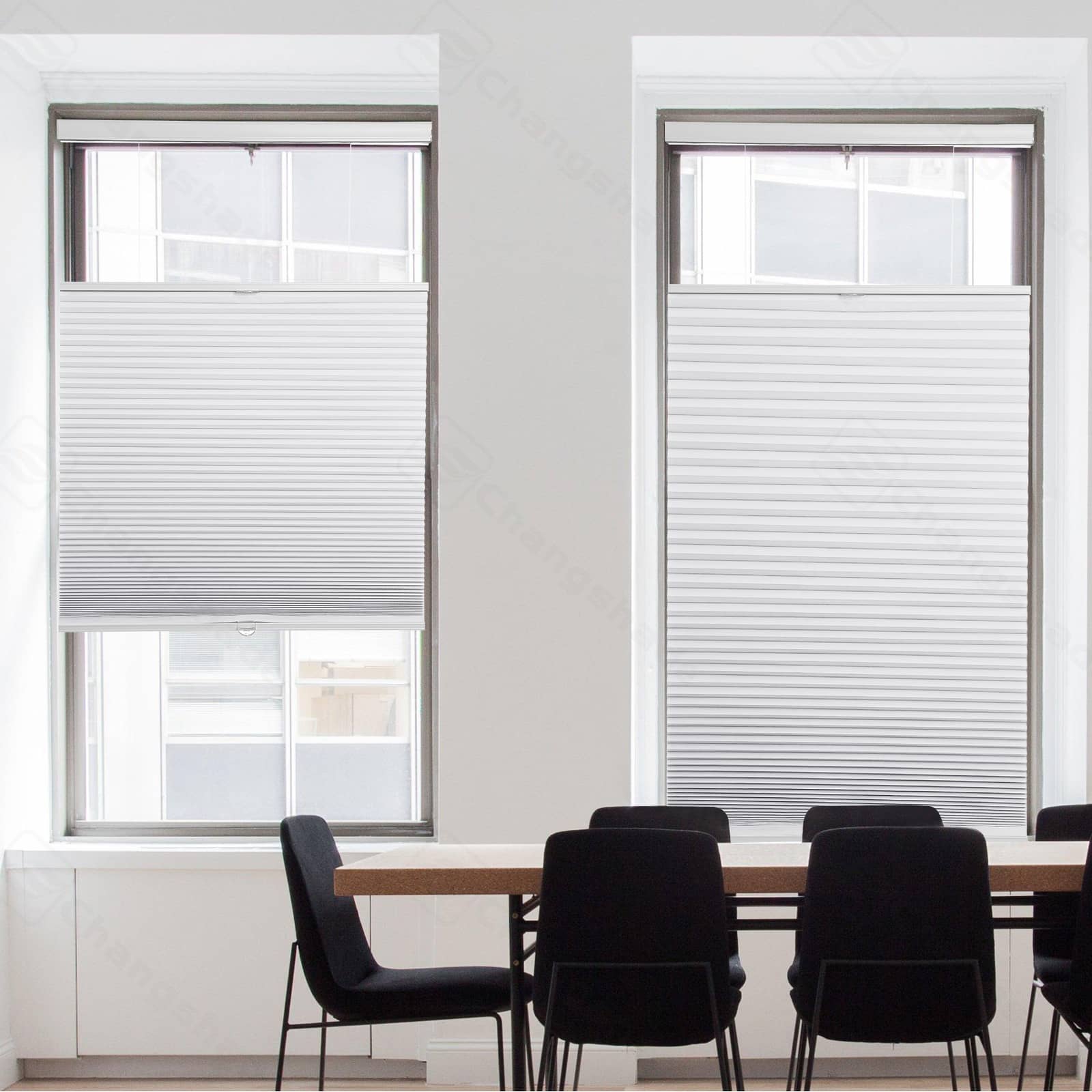
Top down bottom up shades allow privacy at eye level while still letting natural light enter from above.
How Do Top Down Bottom Up Shades Work?
A standard cellular shade usually raises from the bottom.
A shade adds movement from the top as well.
This means you can:
-
Lower the top for more daylight
-
Raise the bottom like a regular shade
-
Cover the center or lower section for privacy
-
Fully close the shade when needed
This is especially useful for street-facing windows.

Instead of choosing between a fully open window and a fully closed shade, you can keep the lower portion covered while allowing sunlight through the top.
Explore Changshade Cellular Shades to compare current top down bottom up options.
Why Choose Top Down Bottom Up Shades?
1. More Privacy Without Losing Daylight
The biggest advantage is privacy control.
For a first-floor living room, bathroom, or bedroom facing a sidewalk, the lower half of the window is often the area that needs the most coverage.

A TDBU shade lets you protect that area while keeping the upper part open.
2. Better Daylight Control
Sunlight changes throughout the day.
You may want more light in the morning but more privacy in the afternoon or evening.
TDBU shades give you more ways to adjust the window without completely opening or closing the shade.

3. Works Well With Cellular Construction
Top down bottom up operation is often combined with cellular shades.
Cellular shades use a honeycomb structure that traps air inside the shade. The U.S. Department of Energy notes that well-fitted cellular shades can help reduce heat transfer around windows.

This means cellular shades can combine:
privacy + daylight control + insulation
Blackout or Light Filtering?
You still need to choose the right fabric.
Light Filtering Shades

Light filtering fabric softens sunlight instead of blocking it completely.
It works especially well in:
-
Living rooms
-
Home offices
-
Dining rooms
-
Street-facing daytime spaces
Choose light filtering when you want privacy but still want the room to feel bright.
Blackout Shades

Blackout fabric provides stronger light control and privacy.
It is usually better for:
-
Bedrooms
-
Nurseries
-
Guest rooms
-
Rooms affected by streetlights
Changshade offers Top Down Bottom Up Blackout Cellular Shades for homeowners who want flexible positioning with stronger darkness.
Remember that blackout fabric does not always mean the entire room will be completely dark. Small light gaps can still appear around an inside-mounted shade.
For better results, measure carefully before ordering.
See our How to Measure and Install Window Shades guide.
Best Rooms for Shades
| Room | Recommended Option | Why |
|---|---|---|
| Living Room | Light Filtering | Privacy + daylight |
| Bedroom | Blackout | Better nighttime privacy |
| Bathroom | Light Filtering / Opaque | Privacy with natural light |
| Home Office | Light Filtering | Reduces glare |
| Nursery | Blackout | Better nap-time control |
Living Rooms
TDBU shades are especially useful for street-facing living rooms.
Keep the lower section covered for privacy while allowing sunlight through the top.
Bedrooms
A blackout TDBU shade gives you flexibility during the day and stronger privacy at night.
Bathrooms
Bathrooms are one of the best applications because you can protect privacy while still allowing light into the room from above.
What About Cordless TDBU Shades?
Cordless operation keeps the window cleaner visually and avoids hanging operating cords.
The U.S. Consumer Product Safety Commission recommends cordless window coverings in homes where young children are present.
Changshade offers multiple cordless cellular shade options designed for everyday operation.
Can You Get No-Drill TDBU Shades?
Yes.
Some top down bottom up cellular shades can also use no-drill mounting systems.
This can be useful for renters or homeowners who prefer not to drill into the window frame.
However, no-drill shades still require compatible window depth and dimensions.
Before ordering, read:
How to Install No-Drill Window Shades
Are There Any Downsides?
TDBU shades are more flexible than standard shades, but they are not necessary for every window.
They can cost more because the operating system is more complex.
And if your only goal is to fully open or fully close the window, a standard cellular shade may be simpler.
TDBU shades are most useful when you regularly need privacy and daylight at the same time.
Final Thoughts
Top down bottom up shades are a practical choice for rooms where privacy and natural light compete with each other.
Choose light filtering TDBU shades for living rooms, offices, and daytime spaces.
Choose blackout TDBU shades for bedrooms and rooms where stronger privacy matters.
Choose no-drill TDBU shades when you want easier installation and your window is compatible.
Explore the Changshade Cellular Shades Collection to compare blackout, light filtering, cordless, and top down bottom up options.